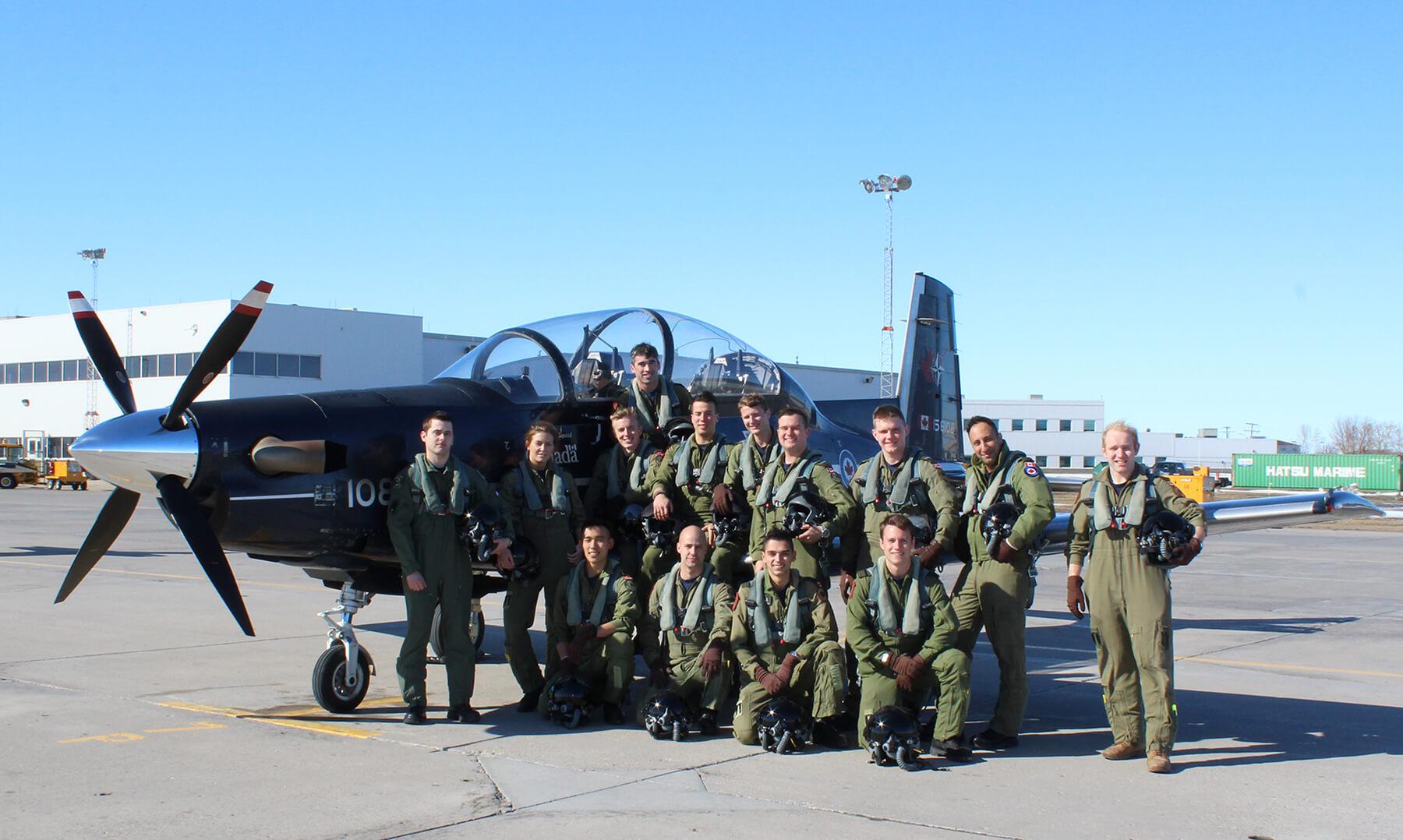
During the Second World War, Canada trained over 130,000 pilots and airmen from around the world in the British Commonwealth Air Training Plan. With a history steeped in military aviation excellence, Canada continues its legacy through the NATO Flying Training in Canada (NFTC) program, attributed as the "world benchmark for military pilot training."
The Inception and Evolution of NFTC
Introduced by Bombardier Aerospace in 1994 and coming to fruition in 1997, NFTC represents a paradigm shift from traditional to modernized flight training techniques. Transitioning from chalkboards to state-of-the-art cockpits, this program equips pilot trainees with forward-thinking skills essential for contemporary combat scenarios.
Collaboration Between Public and Private Sectors
The union of Canadian Forces (CF) expertise and Bombardier's innovation has cultivated a harmonious blend of military focus and corporate efficiency. This strategic partnership magnifies the program's effectiveness and expands its reach to allied nations under the NATO fold.
The Multifaceted Training Regimen

Trainees rigorously progress through multiple phases, each one meticulously designed to instil advanced flying knowledge. Hands-on experience with the CT-156 Harvard turboprops and the BAE CT-155 Hawk jet trainers propels students from fundamental principles to high-stakes tactical operations.
Technological Superiority: An NFTC Hallmark
Digital classrooms, projection systems, and flight training devices amplify the learning environment. Trainees absorb complex procedures through simulation and multimedia tools, embodying the high-tech ethos of NFTC.
An International Melting Pot of Military Pilots
Reflecting a truly global initiative, NFTC boasts participation from NATO member states and partner countries. This diversity not only enriches the training environment but also fosters lasting international military alliances.
Challenges and Future Prospects

While the program has reaped commendable success, waning international enrolment suggests a need for strategic marketing and potential fleet enhancements. Bombardier's willingness to evaluate the addition of new aircraft models ensures NFTC's competitive edge.
Despite shifting market dynamics, the NFTC has cemented its reputation as an incomparable asset in military aviation training. Its success story is a testimony to innovative educational strategies and the power of international cooperation.
Conclusion: NFTC's Lasting Global Impact
Canada's steadfast commitment and strategic alliances keep NFTC at the pinnacle of military flight training. Aspiring pilots from all corners of the globe converge under this program, shaping a new era of aerial defenders prepared to uphold peace and security.
For those visiting Canada to observe or partake in the NATO Flight Training, immersive experiences extend beyond the cockpit. From witnessing the stunning Canadian landscapes to exploring the vibrant hospitality scene, this initiative welcomes visitors into a realm where travel and military precision seamlessly intersect. After engaging days at the training facility, participants and guests can relish the comforts of Canada's renowned hotels, offering restful reprieve amidst a journey of discovery and learning.
Muscat
Oslo
Montego Bay
Valencia
Montreal
Porto
Bangkok
Belgrade
Hanoi
Atlanta
London
- Luton Airport London Uk
- Accommodation Near Heathrow Airport London
- Accommodation Near Stansted Airport London